5 Critical Legal Changes in Australia (2026) That Will Likely Appear on Your Final Exams
The legal landscape in Australia is constantly evolving, and keeping up with the latest changes is crucial for law students preparing for their final exams. 2026 is set to bring several significant updates that could feature prominently in assessment questions. In this blog, we’ll examine five critical legal changes and discuss how they might be reflected in your exams.
1. Changes to Consumer Law and Unfair Contracts
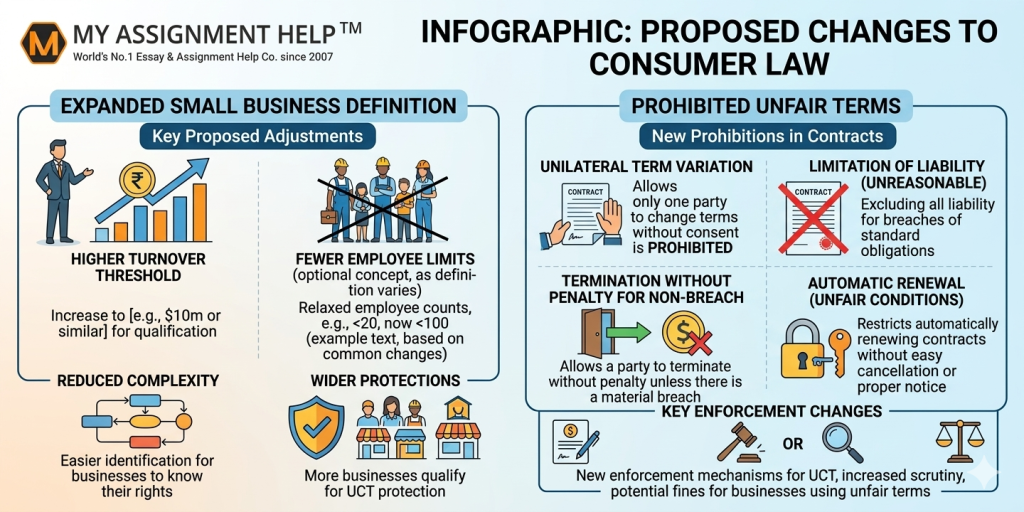
The Australian Consumer Law (ACL) is a hot topic in law exams, particularly when it comes to unfair contract terms. While the ACL currently has provisions addressing unfair terms in standard form contracts for consumers and small businesses, proposed reforms aim to strengthen these protections.
One significant change expected in 2026 is the expansion of the “small business” definition, making more businesses eligible for protection under the ACL. This shift means that a wider range of business contracts will be subject to the unfair contract terms regime.
In your final exams, you could encounter questions that require you to analyze a business-to-business contract and identify potential unfair terms based on the updated legal framework. Being able to correctly apply the reformed rules and assess the impact on small businesses will be crucial.
2. Advancements in Workplace Relations and Employment Law
Workplace relations are another dynamic area of Australian law, and recent developments are set to impact employment contracts, unfair dismissal claims, and enterprise bargaining.
The Secure Jobs, Better Pay Act 2022 introduced significant changes, including restrictions on fixed-term contracts and enhanced enterprise bargaining rights. In 2026, you can expect continued developments in these areas, with potential updates to minimum wage standards and changes to the Fair Work Commission’s powers.
Exams might feature scenarios where you need to advise an employer or employee on their rights and obligations under the updated employment law framework. Understanding the nuances of new regulations will be essential for success.
For comprehensive support with complex employment law assignments, consider seeking business law assignment help from qualified legal experts.
3. Focus on Data Privacy and Cyber Security
Data privacy is a rapidly evolving field, and Australia is taking steps to strengthen its data protection laws. The Privacy Act 1988 is undergoing a major review, and significant changes are anticipated by 2026.
Proposed reforms include stricter requirements for data breach notification, enhanced individual rights over personal information, and increased penalties for non-compliance. These updates will have a profound impact on businesses and organizations across all sectors.
In your exams, you might be asked to advise a company on its data protection obligations under the revised Privacy Act or analyze the potential consequences of a data breach. Being familiar with the new requirements will be critical.
4. Environmental Law and Sustainability Initiatives
With climate change being a pressing global issue, Australia is taking steps to address environmental concerns through legal and policy changes. Environmental law is becoming increasingly relevant, particularly in areas such as renewable energy development, biodiversity conservation, and climate change litigation.
In 2026, you can expect updates to environmental regulations, including stricter emissions targets, enhanced protections for sensitive ecosystems, and changes to environmental impact assessment processes.
Your exams could include questions on environmental law principles, the regulatory framework for renewable energy projects, or the legal implications of climate change. Understanding these developments is essential for students aspiring to practice in this field.
5. Evolving Family Law and Relationship Legislation
Family law is always a sensitive and evolving area. In Australia, there have been recent developments concerning issues such as family violence, child support, and surrogacy. By 2026, you can expect further changes, particularly in areas such as de facto relationships and the legal recognition of diverse family structures.
Exams may feature case studies requiring you to apply the updated family law provisions to complex scenarios. Being familiar with the latest legal developments and their implications for families is crucial.
Key Takeaways for Law Students
- Stay Updated: Regularly review legal news, government publications, and reputable legal resources to stay informed about upcoming changes.
- Focus on Impact: Understand how legal changes will affect businesses, individuals, and the broader society.
- Practice Problem-Solving: Apply new legal principles to practical scenarios through case studies and past exam questions.
- Seek Academic Support: If you’re struggling to understand complex legal concepts or complete assignments, consider seeking professional assignment help.
FAQ – Navigating Legal Changes in Your Exams
Q: Where can I find reliable information on legal changes in Australia?
A: Government websites, official gazettes, and reputable legal journals are excellent sources. Academic databases and textbook updates can also be helpful.
Q: How can I effectively prepare for exam questions on new laws?
A: Create summary notes highlighting the key changes, their rationale, and potential impacts. Practice applying these changes to different scenarios using past papers and practice questions.
Q: Will the exams reflect all legal changes up to the date of the exam?
A: Exams typically focus on legal principles that are well-established at the time of the assessment. However, they may also include questions on significant recently enacted laws. Check with your instructors for specific guidance.
Conclusion
Staying informed about legal changes is vital for law students aiming to excel in their final exams. The 2026 landscape presents both challenges and opportunities. By proactively preparing for these updates and leveraging academic support, you can confidently navigate the evolving legal landscape and achieve academic success.
About the Author:
This blog post was written by Mark, content writer at MyAssignmentHelp, a leading provider of academic support services for law students in Australia. They hold a deep understanding of the Australian legal system and are passionate about helping students succeed in their legal studies.